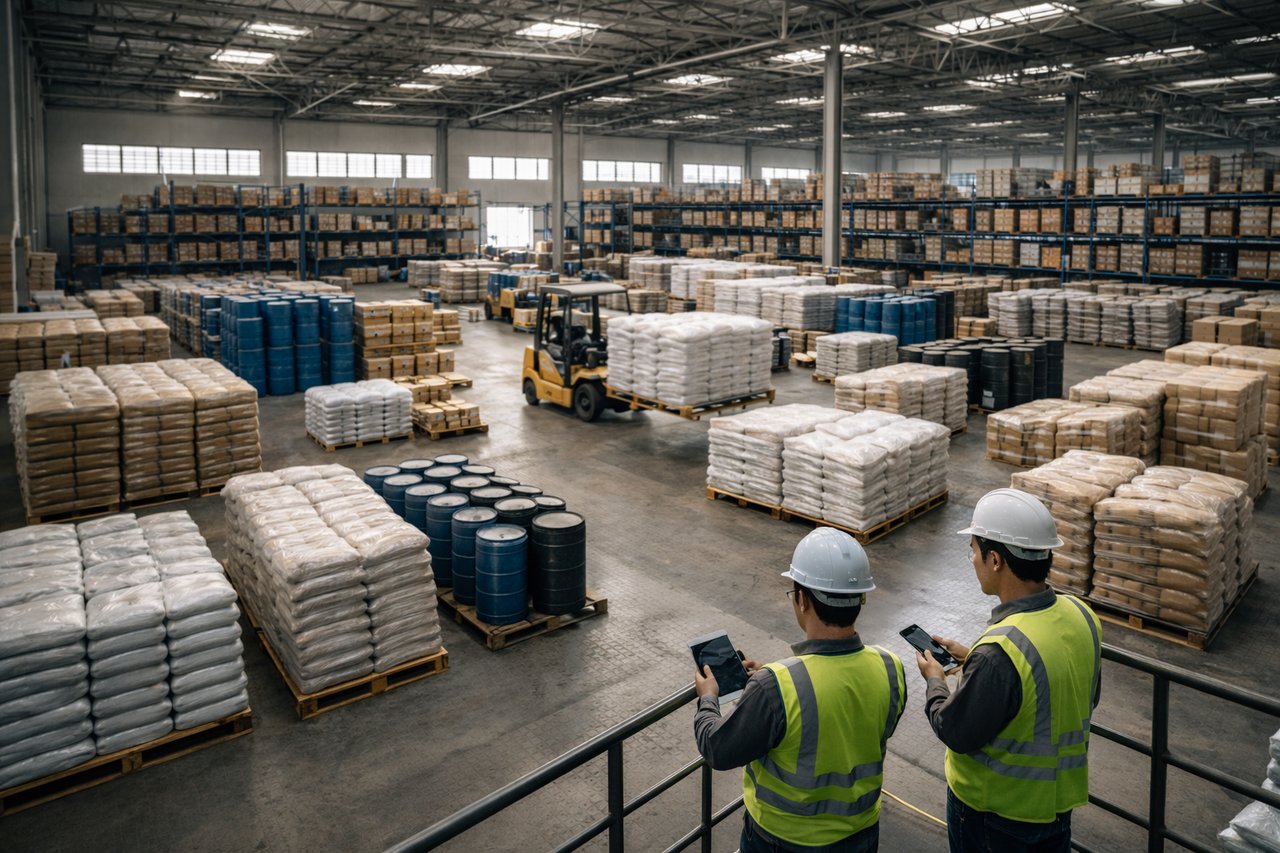
In industrial materials, most companies operate the same way. They move volume through familiar channels. They rely on long-standing relationships. They react to inbound demand. They accept "that's where the market is" as the final answer. And in many cases, that works. But in 2026, the gap between average sellers and high-performing industrial sellers is widening. The difference isn't size. It isn't product mix. It isn't luck. It's leverage. Here's what high-performing industrial material sellers do differently and why it matters across plastics, recycled materials, engineered resins, and broader industrial supply chains.
1. They Build Optionality, Not Dependency
Average sellers often rely heavily on one primary path to market:
- A trusted broker
- A small group of repeat buyers
- A single region
That works until demand shifts. High-performing sellers create parallel demand paths. They maintain broker relationships. They cultivate direct buyers. They expand geographic visibility. They use digital infrastructure to widen discovery. Optionality creates leverage. And leverage protects margin when markets tighten. If you've experienced stalled movement in recycled or secondary materials, you've likely seen this dynamic firsthand.
Related: Why Your Plastic Scrap Isn't Moving
2. They Expand Buyer Visibility Beyond Their Immediate Network
Industrial markets are fragmented by design. Spec tolerances vary. Geographies matter. Freight lanes influence pricing. Credit policies limit participation. The American Chemistry Council (ACC) regularly publishes regional production and demand data that illustrates how segmented plastics markets can be. High-performing sellers recognize that relying solely on relationship-driven networks limits discovery. They consistently ask:
- Who else is buying this grade right now?
- Where else is demand forming?
- Which regions are short inventory?
They widen the aperture. That visibility doesn't replace relationships. It strengthens them.
3. They Engineer Competition Instead of Accepting Market Narratives
Pricing pressure often stems from limited discovery. If only one or two buyers evaluate a lot, pricing reflects that. High-performing sellers expand the number of qualified buyers reviewing inventory. More exposure creates competitive tension. Competitive tension improves outcomes. In industrial commodities, broader participation improves price discovery, a dynamic frequently analyzed by S&P Global Commodity Insights. This is especially relevant for:
- Engineering-grade materials
- Aged inventory
- Off-spec resin
- Recycled feedstock
Competition isn't about pushing harder. It's about structuring visibility.
4. They Remove Transaction Friction That Quietly Shrinks Buyer Pools
Friction eliminates demand. Credit exposure. Net-60 terms. Freight coordination complexity. Manual documentation cycles. Each barrier reduces the number of buyers willing to participate. High-performing sellers reduce friction wherever possible. They align with channels that:
- De-risk transactions
- Embed freight quoting
- Simplify documentation
- Accelerate execution
The Council of Supply Chain Management Professionals (CSCMP) consistently emphasizes that reducing transaction friction improves supply chain velocity. When friction drops, participation increases. And when participation increases, outcomes improve.
5. They Move Faster Than the Market
Speed compounds. Industrial buyers often solve sourcing challenges quickly. If a seller responds slowly, the opportunity closes. High-performing sellers:
- Surface inventory quickly
- Respond to inquiries rapidly
- Streamline contracting
- Reduce approval bottlenecks
Digital filtering, AI-driven matching, and structured workflows aren't about technology for its own sake. They're about compressing cycle time. For more on how structured online selling works in practice, see: How to Sell Spot Resin Online in 2026 Velocity isn't optional in modern industrial markets.
6. They Use Brokers Strategically, Not Automatically
Brokers remain important participants in industrial material markets. For recurring lanes, specialized grades, or scenarios requiring minimal internal lift, they can be highly efficient. High-performing sellers don't eliminate brokers. They choose when brokers are the optimal channel and when additional visibility could improve results. They combine:
- Broker relationships
- Direct sales
- Internal outreach
- Structured digital infrastructure
Strategy replaces habit. That distinction matters.
7. They Treat Market Structure as a Competitive Advantage
Industrial material markets are inherently fragmented. Geography matters. Freight economics matter. Spec tolerances matter. Credit structures matter. High-performing sellers align with systems that reduce fragmentation. Digitized buyer databases. Advanced filtering. AI-assisted discovery. Embedded freight. Embedded payment models. Structure reduces uncertainty. Reduced uncertainty increases leverage.
The Difference Isn't Volume. It's Leverage.
The gap between average and high-performing industrial sellers isn't scale. It's structure. Leverage from optionality. Leverage from visibility. Leverage from reduced friction. Leverage from speed. In 2026, sellers who build structured access to demand outperform those who rely on a single path to market. High-performing sellers don't wait for the market. They widen it. Leverage isn't about working harder. It's about building better structure around your inventory. If you're evaluating new ways to expand buyer visibility without adding internal workload, explore how Matium's infrastructure connects sellers to qualified industrial demand. Listing supply is free and takes less than two minutes.
Frequently Asked Questions
What defines a high-performing industrial material seller?
A high-performing industrial seller builds multiple demand paths, expands buyer visibility, reduces transaction friction, and moves faster than competitors. Performance is driven by leverage, not just volume.
How can industrial sellers increase pricing leverage?
Pricing leverage improves when more qualified buyers evaluate inventory. Expanding discovery, reducing credit friction, and accelerating deal cycles increase competitive tension.
Why does reducing friction improve industrial sales outcomes?
Transaction friction limits buyer participation. When freight, payment risk, and documentation barriers are reduced, more buyers engage, which improves pricing and speed.
How does digital infrastructure improve industrial sales performance?
Digital infrastructure improves filtering, buyer matching, documentation workflows, freight coordination, and payment processing. This increases velocity and expands market visibility.